Learning Objectives:
-Explore and understand the ingredients/characteristics of narrative devices: character, plot structure and setting.
-Hero’s Journey: what is it and how does it work to make a good character?
-How does this affect the style of writing and choice of narrative?
-Character questions to ask yourself and character
-Setting: place you love and hate
-Setting questions.
-Show and don’t tell.
To Demonstrate an understanding of how to build a character and how this effects the style of writing. Write in any form exploring a character, setting and plot: short story, script for film or theatre or radio, beginning of novel, poem or journalistic (non-fiction) article.
What Character’s Need!
-The most important ingredient in any story is character/s is to understand what a character needs.
-Your job is to make attaining this need as difficult as possible by introducing conflicts and drama into the story.
-At the end of a story the need is either fulfilled or denied.
-The character needs to have changed from the state they begun the story in. This is the characters arc.
Hero’s Journey:
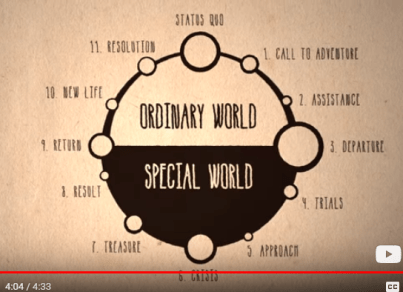
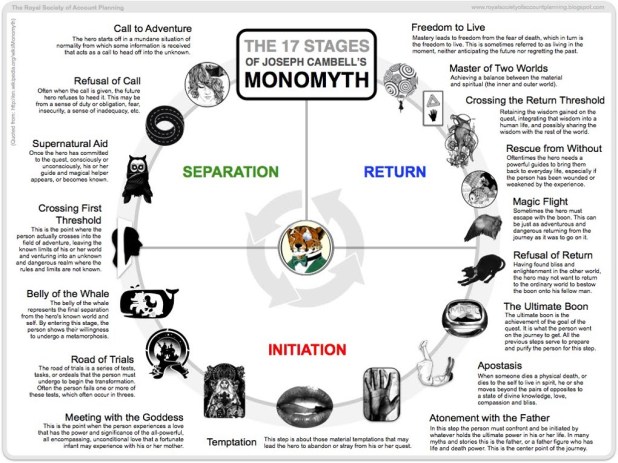
Every story follows or uses the same tropes that have been used for generations: The mono-myth or Hero’s Journey.
In narratology and comparative mythology, the mono myth, or the hero’s journey, is the common template of a broad category of tales that involve a hero who goes on an adventure, and in a decisive crisis wins a victory, and then comes home changed or transformed.
My Journey..
-Going into year 11 and having a hard time focusing
-Uncle Pete dying suddenly and having to go to Cyprus for 2 weeks for the funeral
-Coming back to England and getting into a fight and getting arrested with my sister
-Getting out and having to sit my exams the next day
-Struggling to find myself and be okay again
-Moving out when I was 16 to live on my own with my sister
-Eventually being left on my own and having to work and find my own way
-Having Ed as a mentor/companion along the way
-Taking a huge leap to leave my job and move from Enfield to Canterbury and leave behind everything and everyone I knew
-Getting into Canterbury college to further my education and better my life
What makes a good character?
-How does this affect the style of writing and choice of narrative?
-Perspective, tone, word choice and genre .
Character/ Story sections:
Needs – Themes : money/freedom/justice/love/fitting in/ power/equality/revenge
Conflicts/Obstacles – power/political/antagonist/villains/health/internal & external conflicts/natural disasters/environmental issues.
Fulfilled = happy ending / Denied = sad ending.
When reading a story you don’t instantly love one character, it’s a journey and over time you relate and emotionally connect to a character as you see them grow and over come things as they develop. You see a character that has done things wrong and has flaws but also has good intentions so you see them growing and you have an emphatic understanding as to why they have done what they have done. This makes them original and unique as a character. At some point in the story they over come something that makes them extraordinary by going through extraordinary circumstances. The author makes each character relateable be it either the villain or the main character or a side character that has an affect on the other characters. By setting a tone in a story, helps your reader to understand the bigger picture and have a better perspective on the story line.
Reading Sheet Extracts:
The first extract is very vague and entices you into wondering who the man who’s being described is. The description of the man is very detailed and makes you question why the writer observed this man so closely. It leaves you wondering what is going to happen or what has happened.
In the second extract, it’s a man talking to the reader, making it personal and giving a list of things about himself, in a way trying to sell himself, a very desperate approach. The speech is very light hearted with a sly sense of humor behind what he’s saying. The character is clearly insecure and this can be detected by what he says about himself in his short paragraph. The writer uses the word ‘red’ quite frequently and this could suggest connotations of maybe murder or danger in the future of the story, by implanting the word and colour red into the readers mind they are then open to suggestion of disaster.
The third extract has an emotional feel to it and leaves the reader with a lot of questions. We understand that it is a girl who is talking as she starts off with “he was the most special friend a girl could have”. The girl continues to think back while talking about Briggsy and the reader begins to understand that she is quite sad about what she is saying about this other character. Her short sentences suggest that she’s talking about this other character to someone maybe at a funeral or a therapy session. She is also speaking in past tense which allows us to understand that something has happened in order for her to be speaking and feeling this way.
All three of the extracts are interesting, personally I believe that the third extract leaves the reader with the most questions and entices the reader to want to read more. The second and third extract have more of a personal feel to them as the characters are speaking about themselves or about an emotional connection whereas in the first extract, I feel that it had more of a story vibe which can also bring the reader in to question what happens next. Each author may have been influenced by personal life events in order to write such descriptive pieces or maybe they just have a wide imagination. In the second extract written by Hornby who is also a man, he may of been writing about himself or someone that he knows for his writing influence. In the third extract written by Dewar who is a woman, she could be portraying her feelings about having lost a love one through the character she’s writing about.
The choice of language differs in each piece. In the first extract we get a very detailed and descriptive insight onto a character with sentences very story-like. In the second extract we have a more light hearted, bantering perspective, as if the character themselves is talking to us. In the third and last extract we have a very deep heartfelt approach with short sentences suggesting that the person speaking is chocked up by what they are saying as its emotional and upsetting to say. Each extract has a different intention for the reader as they are each written in different ways.

 Gemma-Louise Costa
Excellent analysis and reflection on the sessions aims and objectives plus the published examples.
Look forward to reading your own work as a result of this very effective analysis and how it will impact in your choices etc.
LikeLiked by 1 person